How a local authority is building neurodiversity learning that sticks
Inclusion lives and dies in the day to day, says Wyre Council's Bethany Smith, and that means investing in developing managers

The views expressed in this feature are those of Bethany Smith in her personal capacity as a learning and development professional and do not represent the official position of Wyre Council.
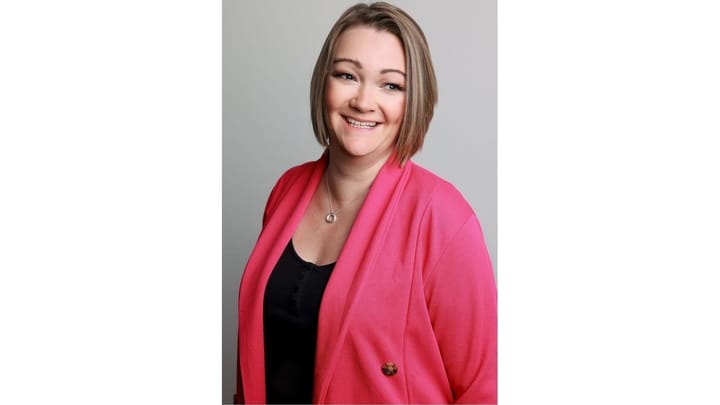
Bethany Smith has spent more than 15 years helping people grow, develop and perform at their best. As learning and development officer at Wyre Council in Lancashire, she designs and delivers learning solutions, supports managers to build capability and champions a culture of continuous learning across a workforce that spans housing officers, refuse crews, customer service teams, parks and streetscene staff and everything in between.
During Neurodiversity Celebration Week, Wyre Council partnered with Neurodiversity UK to deliver dedicated manager training, as a follow-up to a lunch and learn session held for all staff. Bethany spoke to Neurodivergent Works about what prompted that decision, how local authorities approach neurodiversity inclusion and the benefits of a public sector perspective.
Why awareness alone is never enough
The decision to follow up a whole-staff session with dedicated manager training came from a clear-eyed understanding of how learning actually works.
'Awareness and confidence don't arrive in one go,' Bethany explains. 'We had to deliver this learning in layers to help increase the impact and transfer into the workplace. Our lunch and learn was never meant to be the full answer — it was meant to open the door.'
The initial session gave colleagues a gentle introduction to neurodiversity language and a foundation of basic understanding. But the response made it clear that people wanted more than just awareness.
'They wanted to understand what this actually looks like day to day and how to support each other well. That's what led us to the dedicated manager session.'
The follow-up with Neurodiversity UK focused specifically on practical tools, real scenarios and space for managers to ask honest questions. The distinction matters, Bethany says, because managers carry particular pressure around getting inclusion right.
'Giving them practical tools and a safe space to ask honest questions was essential. It helped make the learning feel real, not theoretical — and that's where confidence starts to really grow.'
Making the case
Local authorities do not have the budgets of large tech companies. Making the case for neurodiversity learning requires a different kind of argument.
For Bethany, the case at Wyre Council rested on three foundations: evidence, lived experience and organisational risk.
The national evidence is straightforward. Neurodivergent colleagues make up a significant proportion of the UK workforce, which makes neurodiversity a core capability issue rather than a discretionary one. Lived experience gave that evidence a local dimension. During Neurodiversity Celebration Week, Wyre Council colleagues shared anonymous reflections about what helps them and what does not. That openness created its own momentum.
'When people are that open, you feel a responsibility to do something with it,' Bethany says.
The risk argument completed the picture. Organisations that get inclusion wrong pay for it in turnover, wellbeing, performance and recruitment. But the most important shift in organisational appetite, Bethany suggests, came not from the risk case but from demonstrating that inclusion does not require significant investment.
'It's usually about small, everyday changes — a better conversation, a supportive manager, an adjustment that takes five minutes but changes someone's whole experience.'
Continuous learning, not one-off programmes
Bethany describes inclusive employment as continuous learning rather than a statement. This distinction shapes how Wyre Council designs and evaluates its provision.
In practice, that means layering different types of learning: awareness sessions, manager workshops, toolkits and guidance, shaped by what colleagues actually say they need. It means focusing on practical tools people can use straight away, and making learning accessible for frontline colleagues who do not sit at a desk.
Measuring impact means looking beyond attendance figures. The questions Bethany asks are behavioural: are managers asking more thoughtful, curious questions? Are colleagues feeling safer to disclose? Are adjustments happening earlier and more consistently? Is the conversation moving from 'what is neurodiversity?' to 'how can I support this person well?'
'You can feel when the tone of conversations starts to change,' she says. 'That's when the learning is actually landing — when it becomes everyday practice, not two separate things.'
What the staff feedback revealed
The anonymous feedback gathered from colleagues during Neurodiversity Celebration Week pointed consistently to three enablers: flexible working, trust-based management and a culture of understanding. None of them are expensive. All of them depend on management behaviour.
'The biggest enablers weren't big initiatives — they were everyday behaviours,' Bethany says. 'Inclusion lives and dies in the day to day. You can have the best policy in the world, but if someone's manager isn't confident, empathetic or willing to have a proper conversation, the experience won't match the intention.'
Developing managers who feel equipped to listen, adapt and treat people as individuals is where organisations should concentrate for inclusion investment.
'When those foundations are in place, everything else becomes easier. Disclosures feel safer, adjustments happen earlier and people can work in a way that lets them thrive.'
What the local authority perspective adds
The workplace neurodiversity conversation is largely conducted in the language of tech companies and large corporates. Local authorities, Bethany argues, bring something different, and something useful.
Wyre Council's workforce is varied. The adjustments that work for an office-based policy team will not work for a refuse crew or a frontline housing officer. Inclusion has to be practical and scalable across very different working environments.
'We can't rely on office-based adjustments alone. We have to think about colleagues who might never sit at a computer or who prefer verbal communication.'
That produces better solutions. Organisations with unlimited budgets can rely on expensive programmes. Local authorities have to build inclusion into everyday habits.
There is also a dual perspective that is specific to the public sector. Local authorities serve their communities as well as employ them, and the barriers neurodivergent residents face are often visible in the workforce too.
'We see the barriers our residents face reflected in our colleagues. That gives us a dual lens: we're improving inclusion as both an employer and a service provider.'
Subscribe for free to receive practical guidance on neurodiversity at work, delivered to your inbox