

Thomas Woodhams on creating neuroinclusive hiring at Sony Sports Businesses
As a senior talent acquisition partner at Hawk-Eye, part of Sony Sports Businesses, Thomas Woodhams sits inside a global technology organisation. Diagnosed with ADHD seven years ago, he has been instrumental in helping recruitment processes become more accessible to neurodivergent candidates
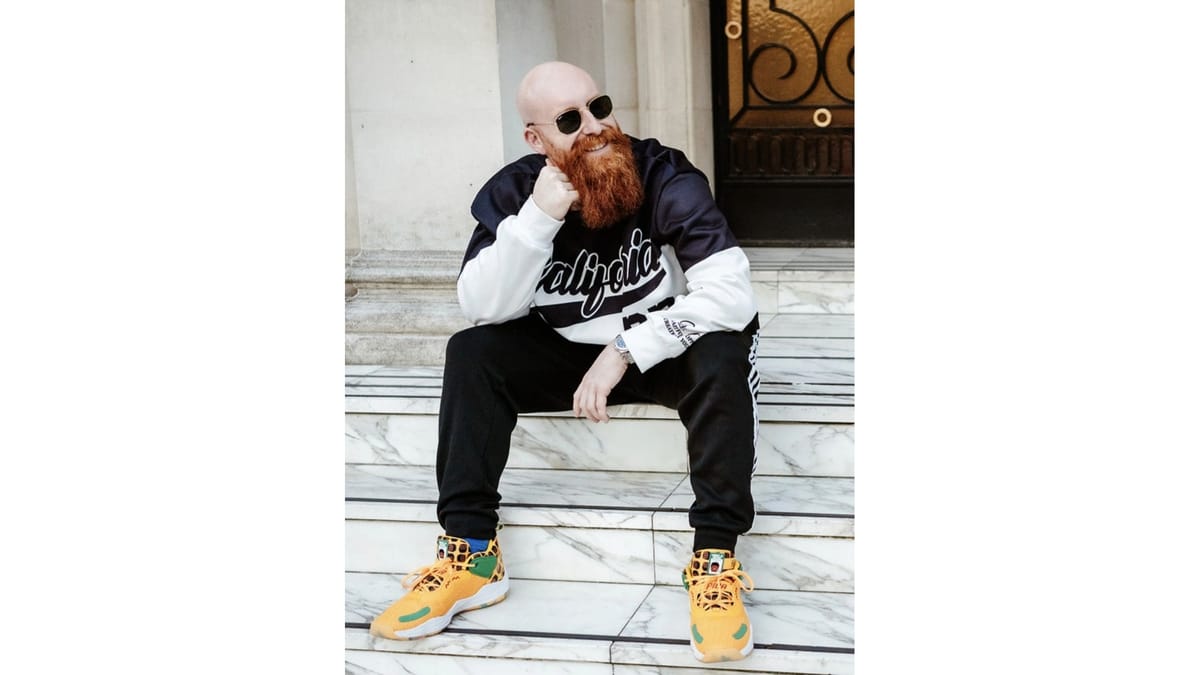
The number of neurodivergent candidates who discount themselves before an application is even filed is impossible to measure. But Thomas has a clear view on what's driving it.
'You don't really know what thoughts and processes people are going through,' he said. But the language of job descriptions is almost certainly losing people at the first hurdle. Phrases like 'fast-paced, really social, loud team' can be damaging.
'When you're neurodivergent, you need context. What does fast-paced actually mean in practice? Does it mean things change by the end of the week?' added Thomas.
Some neurodivergent candidates who interpret language more literally may struggle without specificity and are making decisions based on incomplete pictures. He suspects many are walking away from roles they could do well in.
For Thomas, the fix is simple. Ensuring inclusive language in job descriptions means describing the working environment clearly enough so that candidates can make an informed decision about whether the role's environment is suitable.
Building inclusion from the inside
At Sony Sports Businesses, Thomas has built a small but practical framework for inclusive hiring. The process includes asking candidates upfront whether they have any auditory processing needs, whether they would like questions in advance and what support might help them perform at their best in an interview. He estimates that around 30% of candidates fill it in. For those who do, the framework enables a different kind of hiring conversation.
His LinkedIn presence is part of the same approach: 'I've helped, directly, probably around 400 people,' he said. If someone sees a post and feels even vaguely validated, something shifts. 'Suddenly they feel more comfortable sharing their own experience. And as soon as we're open with sharing our own experience, it's just like — the relief.'
Is tech really more inclusive?
Tech has a reputation for neurodiversity-friendliness, with flexible working, remote options, output over presenteeism, and perhaps a tolerance for eccentricity. Thomas thinks this reputation is partly earned, but the reason is less ideological than practical.
'A lot of engineers are neurodivergent,' he said. 'When you've got your headset in and you're ready to code, you're taken away from distractions. It's you and the computer. Suddenly you can show what you're really about. You might not be very good at communication, but you can pull out code better than everyone else.' The environment, in other words, reduces the friction that makes other settings hostile.
He cited research from a 2023 McKinsey report, which found organisations in the top quartile for leadership diversity had a 39% greater likelihood of financial outperformance than those in the bottom quartile.
However, even in tech, inclusion is manager-dependent. Inclusivity requires managers who ask rather than assume, who are curious with good intention, and who create space for people to say what they actually need rather than nodding along in a meeting and spending the next 45 minutes trying to decode what was said.
On disclosure
When asked whether neurodivergent candidates should disclose their condition during recruitment, Thomas was thoughtful.
'It really depends on where you are in your journey,' he said. For people who have experienced bias or discrimination, disclosure can feel like handing over a vulnerability. His advice: do your research first. Look at who the company puts forward publicly. Check Glassdoor. Find people on LinkedIn who talk about neurodiversity. They don't have to identify as neurodivergent themselves, but if they're sharing and engaging, it signals a culture where safer conversations are more likely.
There are also ways of asking for what you need without disclosing anything. 'Can you just clarify that point?' is not an admission of weakness. It is a reasonable request that most workplaces would grant without question. And it is far less costly than sitting in confusion for an hour because asking felt too risky.
The late diagnosis
Thomas was diagnosed with ADHD seven years ago. Before that: jobs he couldn't hold down, relationships that broke. 'The real work starts when you get diagnosed,' he said. 'And it takes years to even understand yourself.'
Late diagnosis offers a framework for retrospect. Suddenly the past makes sense: 'We're not broken. We're just different.'
He is self-aware about his own masking. With some people he masks, for example with senior stakeholders and in unfamiliar environments. With others he doesn't. The skill, developed over years, is knowing which context he is in.
'Be curious with good intention,' he said. 'Ask people what works for them. You'll start seeing a pattern. It's not all the same support for everyone. Start asking and stop assuming. Be kind, be patient, give people that safe space to be themselves.'
What the podcast stories have in common
Thomas hosts Be You, a podcast that surfaces the parts of people's careers that don't make it onto their CV. Burnout, abrupt exits, moments where things went wrong. The neurodivergent stories he hears there follow a recognisable pattern.
'Most of the conversations I have with neurodivergent individuals are people leaving jobs very quickly,' he said. Six-month stints that end due to performance management reviews, sackings or, most commonly, the person just quitting. That could be the result of a conversation that went wrong, or a tone that landed badly.
The mechanism he describes is rejection sensitive dysphoria, a term often used in ADHD communities to describe intense reactions to perceived criticism or failure that is a common feature of the condition. 'Someone used the wrong tone, and they've taken that and spiralled and thought everyone hated them, and then they've just left.'
Compounding it is the weight of history. He referenced research from psychiatrist Dr. William W. Dodson, which estimates that children with ADHD may receive up to 20,000 more corrective messages than their neurotypical peers by age 10–12.
'"You're too much. You're too sensitive. Why don't you understand? You never get it. You're easily led. Can't focus, can't concentrate." Those labels stick with you.'
A single moment at work can act like an elastic band, snapping someone back to childhood in an instant. 'Suddenly you close off.'
Subscribe for free to receive practical guidance on neurodiversity at work, delivered to your inbox