'Collaborating for Impact': Key highlights from Neurodiversity in Business 2026
Neurodivergent Works reports from the annual event, held in London
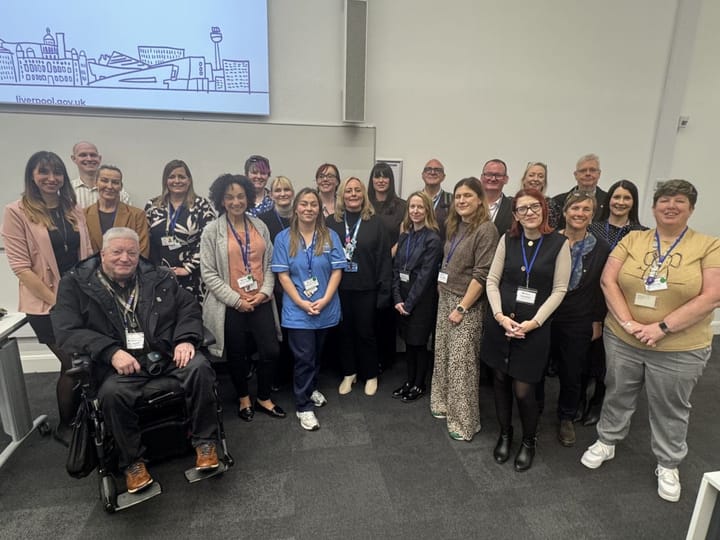
The Neurodiversity in Business conference returned to London on 8 April with the theme ‘Collaborating for Impact’. The event drew delegates from across industry and beyond for a day of keynotes, panels and workshops exploring the state of neuroinclusion at work, and the work that is still to come. Neurodivergent Works provides its highlights from a selection of the day's sessions.
Opening
The event was opened by Dan Harris, founder of Neurodiversity in Business, standing in for Char Bailey, who was absent due to illness. Harris was candid in acknowledging that broader diversity and inclusion initiatives have faced headwinds over the previous 12 months. But he said that would be his only concession to negativity on the day: 'It's within our gift, it's within our remit to change the corporate world as we think it needs to be,' he said.
Urging attendees to carry the day’s learnings into their organisations, he added: ‘The hard work starts tomorrow.’
Building cultures where every brain belongs
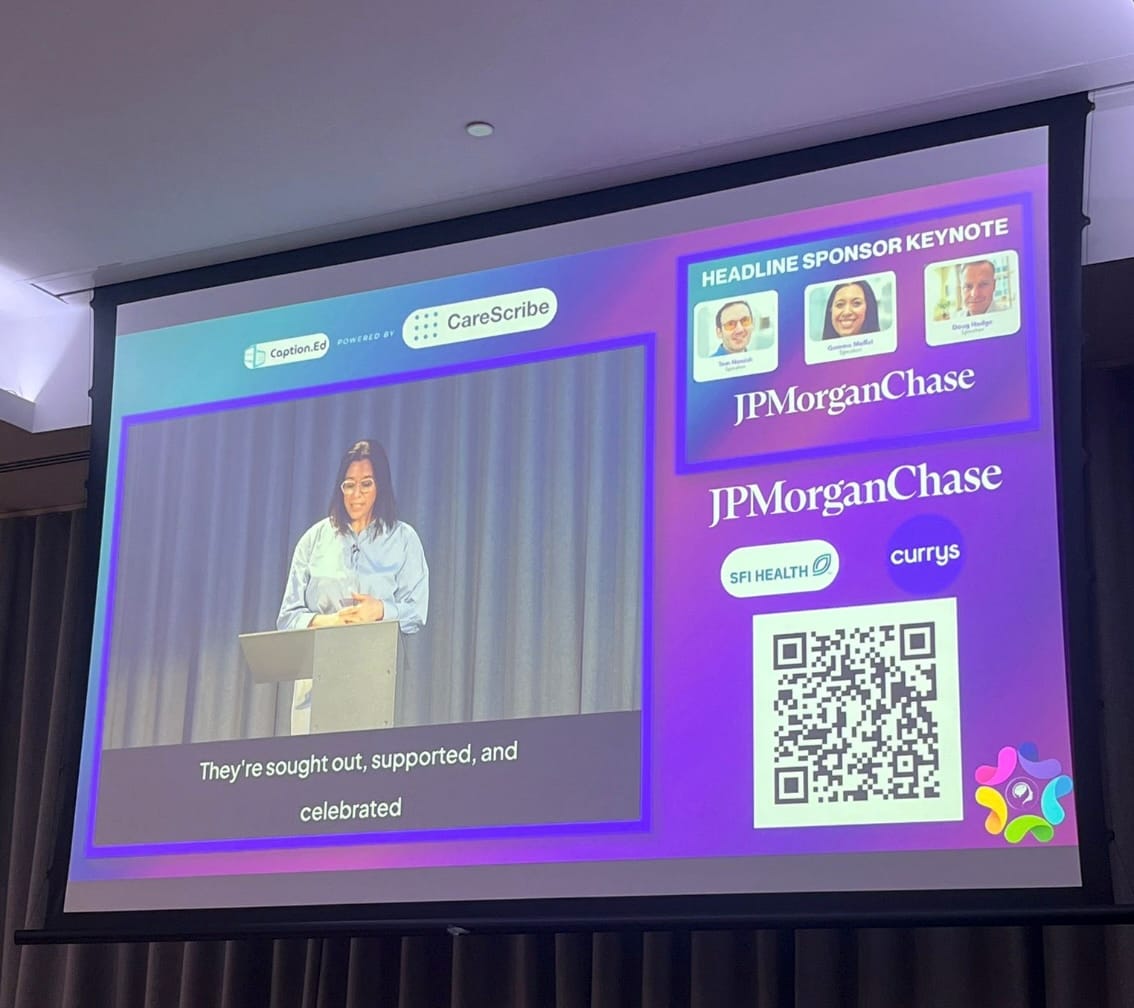
The first keynote was delivered by Gemma Moffat, managing director at JPMorgan Chase, whose address set out both the firm's approach to neuroinclusion and a practical framework that delegates could take back to their own organisations.
Moffat opened by reframing the conversation around neurodiversity away from awareness and towards action. 'Human brains are different by design,' she said. 'These differences can be a source of insight, innovation and resilience.' At JPMorgan Chase, the commitment is to build systems that enable every employee to contribute at their best.
She outlined the firm’s four-pillar approach: hiring pathways that focus on strengths and remove unnecessary barriers; accessibility as a standard practice rather than a special dispensation; manager education that equips leaders to recognise difference without requiring employees to mask; and ongoing support through employee communities. These include the firm's Accessibility Business Resource Group and its global Accessibility Executive Forum.
A significant portion of Moffat's address focused on psychological safety, which was flagged in advance by the NIB community as a priority topic. It is a necessity for neurodivergent colleagues: 'It's the difference between masking and belonging, between burnout and sustainable performance.'
In practice, this means explicit expectations and written follow-ups, multiple formats for contribution and collaboration, meetings with clear agendas and adequate preparation time. Above all, active listening without judgment makes a difference.
Moffat also addressed neurodiversity-related burnout, describing how it can be uniquely invisible in neurodivergent employees, who may perform at a high level until capacity quietly runs out. She urged organisations to design roles around natural strengths, reduce unnecessary cognitive friction, normalise accommodations such as noise-cancelling headphones and quiet spaces, and build recovery time into working patterns. 'This is something in the corporate world we've forgotten to do,' she said.
For managers, her prescription was simple: ask people what helps them do their best thinking, and then listen without assumption. For individuals, she encouraged advocacy for the right conditions, use of tools that suit the way they think, and finding communities where 'you don't have to translate yourself to be understood.'
She closed with a challenge to every person in the room: identify one process to simplify, one meeting to redesign for clarity and one conversation to have with a colleague about how they work best.
'More accessibility equals less accommodation,' she said. The goal is to consolidate a culture and infrastructure so well designed that individuals no longer need to ask for adjustments in the first place. 'The measure of our culture is whether people feel they can show up as they are and still be set up to win,' she added.
Personal stories, systemic change
A panel discussion followed Moffat's keynote, moderated by Tom Norrish, neurodiversity lead for EMEA at JPMorgan Chase, and featuring Moffat alongside Doug Hodge, managing director and head of global DOI governance and operations.
Hodge opened by outlining his remit, setting standards and frameworks to ensure JPMorgan Chase's diversity and inclusion efforts are responsible, inclusive and lawful. He then outlined the scale of the firm's employee community infrastructure. The firm operates 14 Business Resource Groups with a combined membership spanning the majority of its global workforce, with the average engaged employee belonging to at least two. The Accessibility BRG, focused on employees with disabilities and their carers, sits alongside groups serving Hispanic, Black and LGBTQ+ employees, among others.
'We call them Business Resource Groups for a reason,' Hodge said, noting that each is sponsored by senior business leaders and aligned to a strategic centre of excellence. 'Diverse perspectives drive better business outcomes for our clients, our business and for society.'
The conversation turned to the firm's Accessibility Executive Forum: a group of senior leaders who are visibly and actively engaged in disability and neurodiversity advocacy. Moffat explained the thinking behind it: 'Representation drives belonging. If you can see somebody who has experienced similar situations to you, you are more likely to want to stay at a firm that is represented by people like you.'
She said the forum creates a culture by example. Senior leaders are unafraid to discuss their own needs and challenges, and they advocate openly for better experiences across the organisation.
Norrish illustrated the impact with a moment from a panel on autistic leadership held during Disability Inclusion Month a couple of years earlier. 'The ripple it made across the firm was shocking,' he said. 'My door was always swinging open with people saying they had never seen this before: senior managers and leadership teams talking about the autistic journey and their success stories.' One employee told him it was the first time they had felt certain they had a future at JPMorgan Chase.
Both Hodge and Moffat then shared their own experiences of neurodivergence with candour. Hodge described how his son's diagnoses of Tourette's and OCD had set him on a path of personal discovery. A therapist had asked whether anyone had ever suggested he might be on the autism spectrum. 'It was a moment of awakening,' he said. 'I started to see differences as strengths. I started to understand more about myself.' He reflected on years of discomfort on public stages and a longstanding habit of preparing detailed notes. He understands now these behaviours were rooted in the way his brain works. 'I really saw the differences as strengths rather than weaknesses, and it led me to appreciate the unique talents that neurodivergent people bring, both at home and at work. It's not just a professional responsibility. It's a personal mission.'
Moffat spoke about her dyslexia diagnosis as a teenager, at a time when the response amounted to little more than an explanation for poor spelling. No support or follow-up was offered. 'In my head, it was a bad thing, all the way through my twenties and into my thirties,' she said. It was only later, through parenthood and professional experience, that light-bulb moments of self-understanding arrived. She described how advances in AI tools have since transformed her preparation for meetings, and how openness with her team has changed the quality of communication and collaboration. 'As I say to my team and my stakeholders: if I don't make sense because I started a sentence halfway through, please do talk to me about it. It makes for such a better dialogue when you are open.'
Norrish brought the session to a close by reflecting on the room itself. 'When I look out at you all today, I see leaders, because your actions speak. You've chosen to come to the NiB conference. That is inclusive leadership.'
Progress, power and the path forward
Some of the field’s most prominent voices took part in a community partners panel, moderated by Rob Fraser, non-executive director and trustee at Neurodiversity in Business. Joining Fraser on stage were Dan Harris; Nancy Doyle, founder and CEO (acting) of Genius Within CIC and Visiting Professor at Birkbeck, University of London; and Atif Choudhury, CEO of Calling All Minds.
Fraser opened by inviting the panel to reflect on how far the movement had come, and where it is headed. Harris struck a measured note of optimism, pointing to growing corporate engagement, before acknowledging the external pressures facing diversity and inclusion more broadly.
Doyle offered the panel's sharpest challenge to any sense of complacency. Pointing to the disability employment gap, which she said has not moved, and to a sharp rise in benefit claims related to ADHD in recent years, she argued that awareness has outpaced action.
'ADHD is not a progressive condition. Getting a diagnosis doesn't change your ability to work, it changes your self-awareness and the accommodations you receive. In many ways, it should make it easier to be at work.' The data suggests the field has a solid foundation of prevalence research and lived experience testimony, but has yet to develop the next layer: rigorous evidence of what actually works, what interventions are effective and what the cost-benefit picture looks like. 'We're still at quite an immature stage in the research process,' she said.
Choudhury broadened the lens, arguing that the conversation about neurodiversity cannot be separated from questions of power: who gets to claim a label, who bears the risk of doing so, and whose communities remain outside the room altogether. He noted that approximately 82% of the workforce is employed by small and medium enterprises, meaning that corporate-led diversity and inclusion initiatives, however admirable, do not represent the movement as a whole. 'The workplace is also blue-collar workers,' he said. 'We act as if, because LinkedIn doesn't recognise blue-collar workers, they don't exist.' He pointed to the speed with which years of progress had been undermined in the United States as a warning against assuming the movement's gains are secure. 'That says far less about him and more about us that he could do it in three months.'
On the question of where the field might be in five or 10 years, Harris floated the possibility of moving beyond the language of neurodiversity altogether, towards a model of pure cognitive individualisation, where the focus is on each person's specific strengths and challenges, rather than diagnostic categories.
Doyle was thoughtful in response. She noted that the boundaries of what is considered neurodivergent have shifted dramatically over recent decades, and that it becomes conceptually incoherent to apply the term to 50% of the population. The more meaningful direction of travel, she suggested, is towards personalisation of roles, workplaces and support. 'It makes complete sense that we're moving towards a place where personalisation of workplaces is becoming more common, and I think it's going to lead to more effectiveness.' She added that personalisation will not render disability irrelevant: 'There will still be people who are disabled by whatever new world we create, and there will still be a need for support.'
Choudhury agreed that the shift towards individualisation is necessary, but urged caution about timescales and about the limits of a workplace-productivity framing. 'A healthy society is one where you feel welcomed, whether you work or not,' he said. His organisation's name — Calling All Minds — reflects a deliberate effort to move beyond neurological labels towards a conversation about barriers and belonging. 'If we can get to a space of barriers and not labels, we're in a far healthier space.'
The panel was then asked about community partnerships and what it means to be affiliated with NiB. Doyle spoke with evident feeling about what the recognition means to her, describing 15 years of building Genius Within into an organisation that tries to model the inclusion it advocates. The company reinvests 65% of its profits into the community annually, has funded master's degrees, PhDs and professional training, and has provided early-stage grants to organisations including Black Mums Upfront and ADHD Babes. 'We spend an enormous amount of time job-crafting, moving people around, finding ways to sustain employment when people are ill,' she said. 'It is really not easy.'
The session's final stretch turned to the business case for neurodiversity. Harris described a visit to Barclays' Glasgow office as one of his most instructive experiences. This workplace had embedded inclusion by design rather than by request, with a swing in the office that colleagues queued to use, 18 different meeting room types, walking meeting routes and individualised lighting and temperature controls. 'Rather than an autistic or ADHD worker having to go to their boss and ask for adjustments, they've built neuroinclusion into the design,' he said.
Doyle emphasised the limitations of the current evidence base. She noted that the most widely circulated figures on the productivity benefits of neurodiversity programmes are largely marketing material rather than rigorous research, and that companies remain resistant to independent evaluation. 'There's a resistance to look at this, and it's a shame, because there's a potential to close off a lot of the argument if we properly evaluated it.' The available evidence on diversity and team performance, she noted, shows a medium-to-long-term boost but a short-term compromise. 'From a research perspective, the data is still out there, and people need to work with their organisations to let us in to measure it.'
Choudhury reframed the question entirely. 'What's the cost of participation?' he asked. Mental health costs, encompassing absenteeism, sickness and presenteeism, account for an estimated 5% of UK GDP, or around £38 billion per year. The real question, he suggested, is not about proving that neurodivergent employees deliver value, but about demonstrating the cost of exclusion. Doyle closed the thread by invoking a formulation she attributed to Susan Scott Parker, founder of the Business Disability Forum: 'What's the business case for exclusion? Why are we constantly being asked to prove ourselves? That's the question that needs answering.'
Subscribe for free to receive practical guidance on neurodiversity at work, delivered to your inbox