

The first UK trade publication for workplace neurodiversity

Inside the University of Birmingham's 'first UK line-manager neurodiversity training programme'

The University of Birmingham believes it has built the first programme of its kind in UK higher education: a quarter-long, lived-experience-led course aimed at line managers. Demand was such that 100 planned places expanded to 300
Inside the University of Birmingham's 'first UK line-manager neurodiversity training programme'
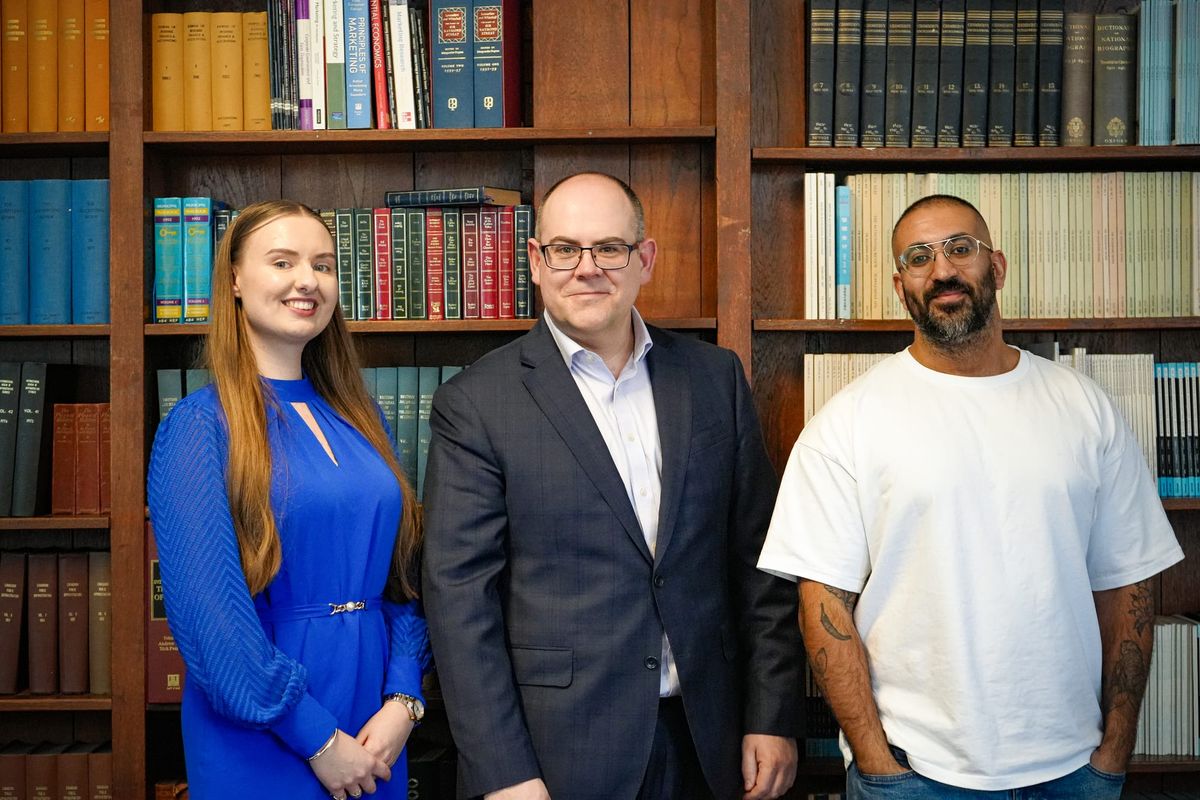
l-r Iveta Pudilova (NNT CEO), Nick Vaughan-Williams (UoB provost), Alex Johl (EDI project manager, UoB)

Neurodivergent Works spoke to Iveta Pudilova, CEO and founder of National Neurodiversity Training, and Alex Johl, EDI project manager at the University of Birmingham, about why the pilot was built the way it was, why line managers were chosen over HR or senior leadership as the point of focus, and what a neuroinclusive university looks like once the training itself has finished. They responded to our questions jointly, reflecting the collaborative nature of the programme itself.

The University of Birmingham employs almost 10,000 staff across its Birmingham and Dubai campuses. It already had a staff Neurodiversity Network that had grown, quickly, into one of the biggest employee networks at the institution: 256 members and rising. It had run awareness sessions, Lunch & Learns, and a webinar, Beautiful Brains, that pulled in 650 sign-ups. What it didn't have was a way of translating that appetite into changed behaviour at the level where, according to its own staff, it actually mattered: the relationship between an employee and their line manager.

'As far as we are aware, this is the first programme of its kind in higher education,' Pudilova and Johl say. Universities across the sector run generic neurodiversity training, usually a single workshop or day session focused on awareness. Birmingham wanted to go further: to equip managers with the confidence, knowledge and shared language to embed neuroinclusion in their teams, and to increase uptake of the adjustments and processes that already existed but weren't being used.

Why a training programme, and why now

Birmingham's EDI Centre, which led the project, worked closely with Neurodiversity Network members to understand what existing provision was missing. Anonymous staff survey data showed a striking proportion of staff self-identifying as neurodivergent — enough to convince the team that this group needed more targeted engagement than generic awareness content could offer.

Even so, a training programme wasn't the obvious first move. 'The team wanted to hear more from the staff community about what was impacting them and use that to shape any new initiatives,' Pudilova and Johl explain. National Neurodiversity Training's model is built around long-term behavioural and cultural change rather than 'click-through' e-learning. This distinction shaped everything that followed.

The programme was built to align directly with institutional strategy, mapped against Birmingham's 2030 Strategic Framework (targeting a place among the world's top 50 universities), its staff development and culture priorities, its civic leadership commitments to Birmingham as a city, its leadership pipeline and its 2025–2028 DEI strategy. There was a practical data argument too: better training was expected to improve disclosure rates among neurodivergent staff, giving the University more accurate data to inform future decisions.

Co-designing before a single session was delivered

Before any curriculum was written, National Neurodiversity Training and the University spent time talking to departments, staff networks, occupational health and HR to identify where the biggest impact could be made. A recurring theme emerged quickly: enthusiasm for supporting neurodivergent colleagues was high, but confidence about what individuals were actually permitted to do was low.

'There was a real lack of confidence and empowerment, with staff at all levels thinking everything had to be authorised and signed off by senior leaders or Occupational Health and Human Resources,' Pudilova and Johl say. That bottleneck slowed down support for neurodivergent staff, left line managers feeling stuck in the middle and ate into the time OH and HR teams needed for complex cases.

A Neurodiversity Audit put numbers behind the anecdotal picture. Before training, managers scored:

  • 62% on understanding neurodiversity at work;
  • 66% on neuroinclusive communication to drive performance and success;
  • 70% on reasonable adjustments and support;
  • 3.2 out of 5 on confidence talking about neurodiversity;
  • 3.4 out of 5 on confidence using the University's own processes, forms and guides to implement support.

National Neurodiversity Training ran a programme design workshop with representatives from the Neurodiversity Network, HR, OH and DEI to refine the curriculum, and built what the team calls a 'University of Birmingham dictionary' — a jargon-busting reference translating what a 'reasonable' adjustment looks like across different roles and departments, alongside relevant policies and cultural norms.

The design process also assembled a team of contributors with lived experience of neurodivergence, whose quotes and recorded interviews were woven through the learning material — a decision Pudilova and Johl describe as central to making the offer 'unique to each client' rather than generic.

Delivery was deliberately multi-modal: in-person and online sessions reinforced by self-paced e-learning, run across a full quarter rather than compressed into a single day. 'Having modular training is most successful,' they say. 'It allows reflection between learning, discussion amongst learners, peer-to-peer learning and actually leads to behavioural change — so that the conversation continues even after the programme.'

Live learning was treated as non-negotiable, for two reasons. E-learning alone risks becoming a box-ticking exercise. And there's a phenomenon the team refers to as 'taught fear' — managers becoming so anxious about saying the wrong thing that they avoid discussing neurodiversity altogether.

A live, closed learning environment gives people room to ask what they'd otherwise consider a 'silly' question, with a bank of FAQs — built both from National Neurodiversity Training's own database and from questions gathered directly with Birmingham's DEI and HR teams — already prepared to meet them.

Two modules emerged as the pilot's foundation: Understanding Neurodiversity at Work (covering neurodivergent types, traits and how they present) and Reasonable Adjustments and Support (defining what 'reasonable' means in practice and navigating the University's own adjustment process).

Why line managers

The decision to centre the programme on line managers rather than senior leadership or HR came directly out of what staff told the University during scoping. 'These conversations highlighted that the relationship between the individual and the line manager was the biggest factor in their role feeling neuroinclusive,' Pudilova and Johl say, 'especially having a manager who is open to learning about neurodiversity, even if they don't have all the answers right away.'

That's not to say HR and leadership were sidelined. HR teams were consulted throughout the customisation process, and many HR staff are themselves registered on the training as line managers. Senior leaders are also on the programme, both improving their own practice and setting the tone for their departments by example.

The logic behind the focus is essentially structural: with a workforce approaching 10,000 people, no central function can hold the operational detail of every role. The people who understand those jobs best are the individuals doing them and the managers closest to them. The pilot's goal was to bring that layer of the organisation together to learn from each other and share what was already working, rather than routing every query up through a central team that couldn't scale.

'The University is taking the approach that inclusion is not an add-on, optional, or something only asked about in an interview,' Pudilova and Johl say. 'Instead, it is framing inclusion as a key leadership skill.'

For this pilot, the cohort deliberately mixed all levels of seniority — a departure from National Neurodiversity Training's usual approach of building separate learning pathways by role and existing knowledge. A post-programme evaluation is planned, measuring knowledge, confidence and behavioural change with results broken out by role and department, distinguishing senior leaders, HR managers and other line managers. Future cohorts are already being discussed with department- and school-specific tailoring in mind, reflecting the reality that a university this size contains many overlapping sub-cultures.

Lived experience, handled deliberately

NNT team and UoB EDI director

Lived experience runs through the programme by design, not decoration. Staff volunteered to share their experiences — some positive, some not — and National Neurodiversity Training built in briefing documents and one-to-one preparatory meetings with every speaker to ensure they felt supported going in.

'Not because they were pulling at the heartstrings,' Pudilova and Johl say, 'but because some of it just felt so simple and straightforward, and the impact of getting it right was huge.' The intention was for line managers to hear directly, and without judgement, how the University's existing policies and processes could work in practice, and where they weren't.

The tone was set at the top. At the pilot's launch day, Iveta Pudilova — who is autistic and has ADHD — spoke in her keynote about growing up non-verbal and about experiencing verbal shutdowns to this day, a common experience among autistic people. National Neurodiversity Training also deliberately assigned one of its own Lead Educators, Nico, who is autistic and has ADHD, to deliver core content. Nico has written about his experience of being sectioned, and speaks regularly about how growing up in South Africa shaped his relationship with race, ethnicity and neurodivergence — material that has visibly resonated with learners.

"Thank you so much, Nico, for your great delivery, being so vulnerable, and sharing your lived experiences. This training is the highlight of my week and has given me so much as a manager." — Training participant

Feedback consistently singles out the lived-experience sections as the most impactful part of the programme. The recurring message from speakers, according to Pudilova and Johl, is not that managers need to become experts: 'There's no need for a manager to know everything about a particular neurodivergence or have all the answers — instead it's about starting the conversation and being willing to try new things.'

What's next

The scale of demand caught the University by surprise. The programme was designed to fill 100 of 300 available places; it filled all 300 and built a waiting list. Running a course over several months, rather than as a single session, was clearly not a barrier to uptake.

Themes for future training are already surfacing. The University is developing a pathway for staff who are 'neuro-curious' — people who suspect they may be neurodivergent but aren't sure, and need help navigating University systems to explore that.

A second emerging theme is the overlap between neurodivergence and parenting or caring responsibilities: parents of neurodivergent children are, the team notes, more likely to experience burnout or struggle at work, and discussions are underway about a dedicated learning option for staff in that position.

National Neurodiversity Training also runs distinct offers for neurodivergent employees themselves, for neurotypical colleagues without line management responsibility and what it calls its 'Neuro-Curious Learning Pathway' — not diagnostic, but oriented around best ways of working for people exploring whether they might be neurodivergent. Several people without direct reports have already asked to access training, a demand National Neurodiversity Training is now looking to build into future cohorts.

Asked what a mature, embedded neuroinclusive culture ultimately looks like at an institution this size, Pudilova and Johl point to two conditions. First: scalable, accessible processes and guidelines — covering disclosure, accessing support, and defining what 'reasonable' actually means — that are not just written down but genuinely taken up, with continuous improvement built in.

Second: an active Neurodiversity Network or equivalent employee resource group, giving people across a large, dispersed organisation a way to connect and learn from each other. 'The University of Birmingham already does this fantastically,' they say, 'and this pilot was a wonderful way to build on that.'

The pilot's early numbers suggest the model is working. Across the cohort, managers recorded an average 20-percentage-point increase in their understanding of neurodiversity at work, an 18-percentage-point increase in their knowledge of reasonable adjustments and their ability to implement support, a 30-percentage-point increase in adoption of the University's own guidelines, policies and processes, and a 10-percentage-point increase in their knowledge of how to inclusively performance-manage their teams.

As of 19 June 2026, Birmingham's managers had collectively logged 1,763 hours of learning on the subject.

For a pilot built on the premise that inclusion should be treated as a core leadership skill rather than a box to tick, that's a lot of hours. With 300 places gone and a waiting list behind them, evidently there is more to come.

With thanks to Iveta Pudilova, CEO and founder of National Neurodiversity Training, and Alex Johl, EDI project manager at the University of Birmingham.

Subscribe for free to receive practical guidance on neurodiversity at work, delivered to your inbox.

Subscribe for free

    Proud media partner of

    The Great Geek Together