Liverpool's city-wide neurodiversity strategy sets new standard for employers
In a UK first, Liverpool has launched a city-wide neurodiversity strategy that presents a practical framework for employers
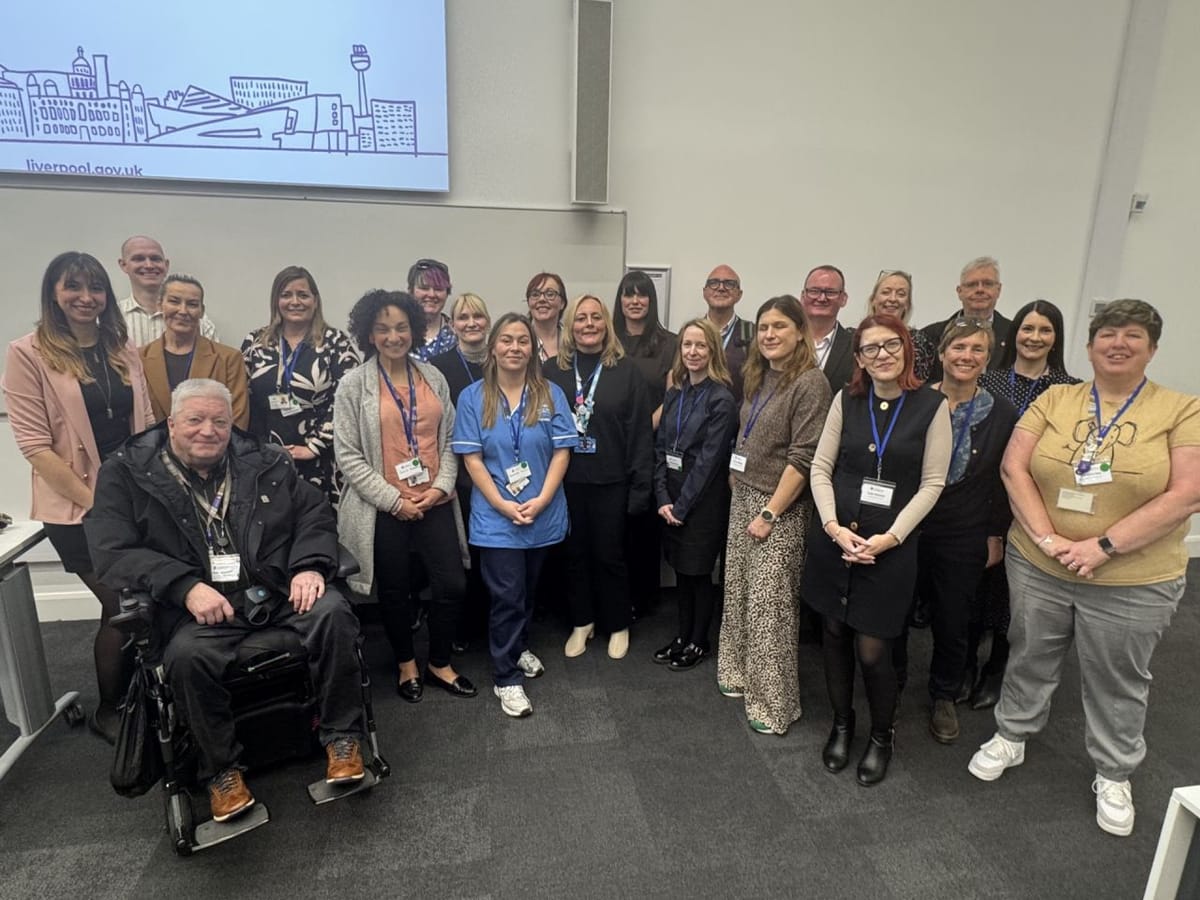
Liverpool City Council has published what it describes as the UK's first all-age city neurodiversity strategy. Announced last year, the official launch of Liverpool’s Commitment to Neurodiversity - A Strategy for an Inclusive City 2025–2035 took place on 24 March 2026. The 10-year plan covers employment, education, health, housing and community inclusion for the city's estimated 70,000-plus neurodivergent residents.
The document contains valuable insights for HR professionals and DEI leaders because it acts as a model for what systemic, co-produced neuroinclusion can look like at scale.
The strategy was developed in partnership with neurodivergent residents through the Liverpool Neurodivergent Co-Production Group and the Unheard Voices platform, alongside NHS Cheshire and Merseyside and a wide range of local organisations.
It was launched at the Annual Neurodiversity Symposium at the University of Liverpool. The event brought together health, education, employment and voluntary sector leaders alongside researchers and people with lived experience.
The scale of the challenge
Liverpool has the highest rates of autistic children and children with significant learning difficulties in England. Autism diagnoses in the city have doubled over the last decade, and around 1.7% of people registered with a Liverpool GP have a diagnosis of autism, against an England average of 1.2%. ADHD diagnoses stand at 1.25% of the registered population, which is also above the national figure.
For employers, the data shows that 70% of autistic people and 54% of people with ADHD in Liverpool have at least one co-occurring health condition, with depression cited as the most common. These are the people already in the workforce, trying to enter it, or who have left because the environments they encountered were not built for them.
The strategy shows that chronic under-employment sits alongside other stark inequalities faced by neurodivergent people: poorer health outcomes, significantly higher rates of anxiety, depression and suicide compared to neurotypical peers, greater vulnerability to homelessness, hate crime and involvement in the criminal justice system. These inequalities are products of systems, including employment systems, that were not designed with neurodivergent people in mind.
What neurodivergent people said
The strategy draws directly on what neurodivergent people and their families told the Liverpool Neurodiversity Strategic Partnership during its development. Their voices run throughout the document.
One professional working with neurodivergent people put it plainly: 'I often find the support available to find and keep work is not tailored to neurodivergent individuals, despite their having a huge number of skills to offer. Many neurodivergent people who are struggling to work would benefit from specific work schemes for neurodivergent individuals, with additional, trained support.'
Others described the exhaustion of navigating systems that do not listen. People spoke of feeling misunderstood, excluded and worn down by having to explain themselves repeatedly to services that do not always respond. This brings clear parallels with workplace experiences, such as masking, people-pleasing and a reluctance to disclose. These behaviours are practised long before someone enters employment.
The disclosure and diagnosis problem
One of the most important sections of the strategy for HR professionals is its treatment of self-identification and formal diagnosis. Assessment and diagnostic services are under considerable strain, with demand far exceeding capacity and many people facing long and often unacceptable waiting times. Women and girls are consistently underdiagnosed. Cultural stigma within Black, Asian and other minoritised communities leads to denial, isolation and lack of recognition.
The strategy's position is clear. Clinical validation should not be the only avenue to professional support. Lived experience should be recognised as equally valid and sufficient for understanding and the provision of reasonable adjustments. For HR teams still operating within a narrow framework that requires formal diagnosis before adjustments are made, this is a direct challenge. It is also a legally significant one, given the Equality Act's definition of disability does not require a formal diagnosis.
The strategy commits to advocating for policy changes that recognise self-identification, not just formal diagnoses, as a basis for support. Employers would do well to get ahead of that shift rather than wait for it to be mandated.
What employers are being asked to do
Under Priority 4 — Right to a Fulfilling Life — the strategy commits Liverpool to a comprehensive set of employment commitments. These include working with employers to develop inclusive workforce practices, promoting training, apprenticeships and entrepreneurial pathways that reflect and harness the diverse strengths of neurodivergent individuals, expanding supported internship opportunities, and providing career guidance and raising aspirations for young neurodivergent people still in education.
The strategy is also committed to supporting smooth transitions to adult services for young people moving from children's services, explicitly including planning for employment, and to enhancing the Liverpool Autism Spectrum Service for Adults. It proposes establishing an Intensive Support Function for autistic individuals at risk of crisis. That last commitment is significant for employers: it addresses the point at which employment most commonly breaks down entirely, and signals that the city intends to build the community infrastructure that allows neurodivergent employees to remain in work rather than exit it.
Crucially, the strategy frames all of this not as exceptional provision but as good management. The things neurodivergent people ask for, such as clarity, consistency, structure and time, are presented as the conditions under which most people do their best work. Designing for neurodivergent people benefits everyone.
The co-production model
The strategy was guided by the Liverpool All Age Co-Production Charter, which sets out a ladder of engagement from consultation through to co-production: listening, informing, education, engagement, co-design and working together. The co-production subgroup and the Unheard Voices platform shaped its priorities, its language and its commitments.
For HR professionals, this model is directly transferable. The question it poses for every organisation with a neurodiversity strategy or employee resource group is whether neurodivergent employees were involved in designing the support they receive, or whether that support was designed for them by people who mean well but do not share their experience.
Designing differently
Priority 5 — Working Differently — sets out how Liverpool intends to transform the way services are designed and delivered, which has direct relevance for employers thinking about how they build neuroinclusion into their organisations. The strategy commits to co-designing services with neurodivergent individuals using data, research and emerging digital tools, strengthening peer support and advocacy networks, and partnering with academic institutions to explore the systemic factors contributing to unequal treatment and life outcomes for neurodivergent people.
It also commits to engaging directly with underrepresented communities to ensure that neuroinclusion does not become a middle-class or majority-ethnicity concern. The strategy is explicit that neurodivergent experiences differ significantly across lines of race, gender, class and culture, and that any approach which does not account for those differences will reproduce the inequalities it claims to be addressing.
For HR professionals, the message is the same one that runs throughout the strategy: inclusion cannot be designed in a room without the people it is designed for. The tools, the frameworks and the policies matter, but only if the people who will live with them have shaped them.
The data gap
The strategy is candid about a significant limitation: there is no reliable data on neurodivergent workforce participation at local or national level. Neurodivergent conditions are not routinely recorded in workforce data. The DfE's School Workforce Census records disability status but does not capture neurodivergence specifically. The same is true in most private sector organisations.
This matters because without data, it is impossible to know the scale of under-employment, track the impact of interventions, or hold anyone accountable for change. The strategy commits to improving data quality and consistency, and to partnering with academic institutions to explore the systemic factors contributing to unequal employment outcomes. How employment-specific measures develop over the strategy's lifetime will be one of the key things to watch.
Measuring success
The strategy sets out seven markers of success for neurodivergent people in Liverpool by 2035: acceptance and inclusion, access to support, opportunities and growth, positive relationships, autonomy, health and wellbeing, and family support. These are deliberately broad, reflecting a commitment to measuring neurodivergent lives in full rather than reducing them to employment statistics alone.
Accountability sits with the Liverpool Neurodiversity Strategic Partnership, which will co-develop specific measures in the first year and review them annually. The approach of building the measurement framework with the community is consistent with the strategy's co-production principles. As those measures are developed, the question of how employment outcomes will be specifically tracked will be one to watch closely.
What this means beyond Liverpool
No other UK city has attempted anything like this. The scope is ambitious, the co-production model is exemplary, and the framing acknowledges that neuroinclusion is a systemic challenge, rather than a series of individual accommodations.
Councillor Angela Coleman, Cabinet Member for Adult Social Care, said the strategy had been a collaborative and meaningful process. 'I want to thank the residents who shared their lived experiences — your insights have shaped this work and will help us build a more inclusive future for our city.'
For HR professionals outside Liverpool, the strategy is useful in two ways. It provides a language and a framework for making the internal case: the data, the economic argument, the shift from compliance to culture. And it sets a standard. If a city of half a million people can commit to a 10-year neuroinclusion strategy built around lived experience, the question for every organisation with a neurodiversity policy is whether that policy is built on the same foundations, or whether it is still, at its core, a document written about neurodivergent people rather than with them.
Subscribe for free to receive practical guidance on neurodiversity at work, delivered to your inbox