The first UK trade publication for workplace neurodiversity

From Oatly's head of people to neurodiversity consultancy: 'We're always retrofitting rather than building differently'

Laura Wyatt spent a decade in people leadership, including six years building the people function at Oatly, before founding Qualia Collective. She tells Neurodivergent Works why HR has been thinking about neurodiversity through the wrong lens — and what it would mean to get it right

From Oatly's head of people to neurodiversity consultancy: 'We're always retrofitting rather than building differently'
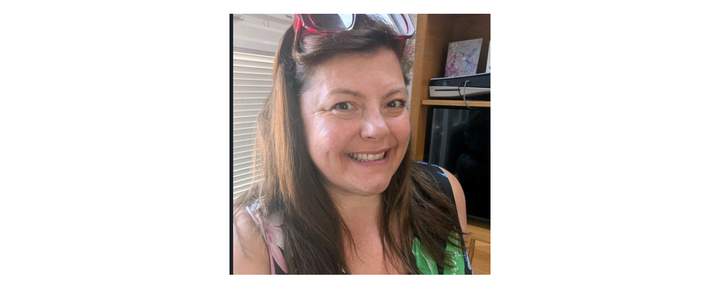
Laura Wyatt, founder of Qualia Collective

When Oatly won Sunday Times Best Place to Work, Laura Wyatt was running the people function she had built from scratch. High engagement scores, a culture that worked. Looking back now, she is clear-eyed about how much of that was intentional.

'Honestly? Mostly incidental,' she says. 'We built the people function around three cultural anchors: trust, flexibility and shared empathy. In retrospect these created conditions that were genuinely neuroinclusive, but that wasn't the explicit design intent. It was strong cultural instinct, rather than a neuroinclusion strategy.'

Each of those three anchors did structural work that a formal neuroinclusion programme might have tried to replicate. Trust meant open conversation, which meant people felt safe to disclose and name what they actually needed. Flexibility meant reasonable adjustments were largely self-administered: people could experiment with ways of working that balanced their own needs with their team's, without a formal process. And the empathy embedded in the culture created space for real conversation rather than performance management by default.

Purpose mattered too. 'When the why is compelling enough, it can unlock engagement that metrics and KPIs simply don't reach,' she says. For neurodivergent employees whose motivation often works differently to conventional performance structures, that distinction is significant.

But Wyatt is careful not to let the Oatly story become a template. 'The lesson I carry from that is that neuroinclusion doesn't always require a dedicated framework — but the risk is that incidental inclusion is fragile. It depends on leaders who happen to have good instincts rather than systems that hold regardless of who's in the room.'

The wrong lens

Since founding Qualia Collective in December 2025, Wyatt has moved from being the HR professional that neurodiversity consultants pitch to, to being the consultant doing the pitching. The shift has clarified something she now thinks is a fundamental problem with how HR approaches the subject.

'I fell into a trap I suspect is pretty common in HR: treating neurodiversity as a DEI topic. Something to include, accommodate, report on. What I understand now is that it's actually a question of workplace design and collective cognitive functioning.'

For Wyatt, that reframe changes everything about what you prioritise and where you intervene. The neurodiversity conversation is doing two things simultaneously. It is revealing where genuine support is needed for neurodivergent employees; and it is exposing where the system was never actually working for a much larger group of people.

'Much of what we call "standard" workplace design is optimised for one cognitive style, and that rigidity has costs that go well beyond the neurodivergent population.'

The gap in HR training, as she sees it, follows directly from this. 'We're taught to see neurodiversity through an accommodation lens rather than a design lens. Which means we're always retrofitting rather than building differently from the start.'

Two lenses at once

Wyatt's MSc in Organisational Psychology from UCL is unusual in a space where most practitioners come from a coaching or lived experience background. It became more personal than she had anticipated. She was diagnosed with ADHD while completing the degree: learning about neurodivergence academically at the same moment she was beginning to understand it in herself.

'That combination has fundamentally shaped how I approach this work,' she says. She also has diagnoses of autism and dyslexia, giving her a perspective that spans both the research and the lived experience.

One thing her academic grounding gave her was a sharper eye for misinformation: 'How much of what circulates in communities, on social media and in training programmes, doesn't hold up when you go looking for the empirical foundations. Or is so oversimplified it misses the point. Misinformation in this space is rife.'

That matters because the stakes are real. 'When you're advising organisations on how to design work and support employees, being evidence- and science-informed where possible is important. These are people's working lives.'

What an HR background changes

Neurodiversity consultancy can be a crowded space. Wyatt is direct about what she thinks her particular combination of experience makes possible, and what it means for the advice she is able to give.

'Neurodiversity touches virtually every part of the people function: hiring, onboarding, talent management, L&D, performance, policy, culture, leadership. These aren't adjacent to my background, they are my background.'

Equally important is knowing where organisational resistance comes from. 'I've been the person on the receiving end of a consultant's recommendations wondering how on earth we'd implement them. That means I design interventions with the friction already accounted for, rather than leaving it to the client to figure out.'

What hypergrowth does to neuroinclusion

Wyatt built the Oatly people function through a pandemic and an IPO. The experience gave her a particular perspective on what happens to neuroinclusive cultures when companies scale. It is not always good.

'When a company is small and moving fast, it can accidentally be one of the best environments a neurodivergent person can work in. Roles are fluid, output matters more than process, hierarchy is flat, and there's enough chaos that people build their own systems and find their own rhythm.'

Formalisation changes that. As companies scale, competency frameworks arrive, standardised processes bed in, meeting cultures inflate and performance criteria get written with a very particular kind of brain in mind. The unofficial workarounds that kept neurodivergent employees thriving begin to erode.

'People who were high performers in the startup phase start to experience new friction points and struggle as a result. Not because they've changed, but because the measurement and the environment did.'

And this happens at exactly the moment when psychological safety is most under pressure. 'For neurodivergent employees, who are often already running a constant background process of self-monitoring and adaptation, that erosion of safety can be the thing that finally breaks it. Change lands differently for different brains.'

What HR leaders at scaling companies should do differently

For HR leaders navigating this moment, Wyatt's recommendations are specific. Formalise outputs rather than ways of working. Define what great performance looks like, and leave genuine flexibility in how people get there. Audit competency frameworks for hidden conformity, because most encode neurotypical communication styles as professionalism. Make psychological safety structural rather than aspirational, building actual routes for people to raise concerns without career risk.

On communication, her point is one that applies well beyond neurodiversity: 'As organisations scale, the default tends toward synchronous, verbal, high-context communication. Offering genuine alternatives — written briefings before meetings, async decision-making where appropriate, clarity over implication — isn't a reasonable adjustment for a few people. It's good communication design for everyone.'

And watch the hiring criteria, she adds. As companies grow, 'looking senior' becomes a filter, and it can quietly select against the unconventional people who built the thing in the first place.

The thread running through all of it is the same as the lesson she takes from Oatly: good instincts are not enough. 'Make neurodiversity part of the conversation as things formalise. Not as an afterthought or an accessibility checkbox, but built into how new structures, communication channels and performance frameworks are designed from the start.'

Subscribe for free to receive practical guidance on neurodiversity at work, delivered to your inbox

Proud media partner of

The Great Geek Together