The first UK trade publication for workplace neurodiversity

How Kate Jenkinson is rewriting the HR neuroinclusion playbook

Kate Jenkinson PhD, FCIPD has spent her career as a research scientist, HR director, executive coach and business poet. She tells Neurodivergent Works why organisations keep losing neurodivergent leaders and why poetry is part of the answer

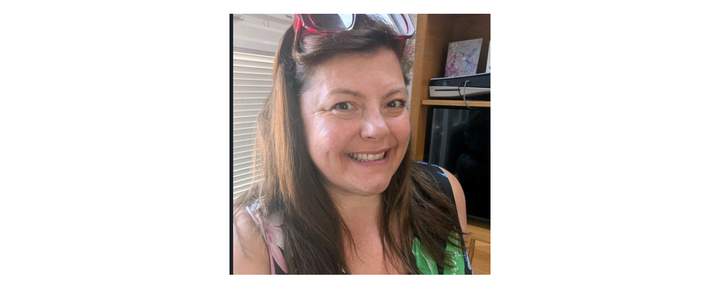
How Kate Jenkinson is rewriting the HR neuroinclusion playbook
Kate Jenkinson PhD, FCIPD

Kate Jenkinson describes her career as squiggly. It began in biological sciences, investigating whether a plant specimen was a new species, before moving into HR, then executive coaching, then something that sits at the heart of everything she does: poetry.

The thread running through all of it is the same. 'What kept me in HR for so long was the variety, the challenges and the interesting environments,' she says. 'But once the challenge and novelty had worn off and we moved into maintenance and management rather than strategic leadership, that's when I started to get disinterested.'

She now understands that restlessness is part of how she is wired. When she reached the peak of her HR career as senior HR director covering Europe, the Middle East, Africa and India during the Covid pandemic, she was still burning out. 'That told me I needed a completely different challenge.'

Organisations often assume leaders want to be managers, added Jenkinson. This is something they often get wrong: 'Many organisations prefer stability and maintaining the status quo. For someone motivated by creativity and growth, that quickly leads to burnout.'

Practising neuroinclusion before it had a name

Jenkinson spent senior HR director roles at SCIEX, Houghton International and Rockwell Automation. She was not diagnosing neurodivergence, that was never her role, but she was already practising what she now recognises as neuroinclusion.

'I ensured that communications were good and that there were good channels to connect people. If someone struggled, I never assumed they were lazy or incapable. My instinct was that something was getting in their way.'

That instinct came from personal experience. 'Whenever I struggled, it was because something in the environment was blocking me. When the barrier was removed, I could succeed.' Her approach, consistently, was to uncover the challenge and remove the blocker.

Would she do anything differently now? 'I'd probably have better language to explain what was happening for people. But honestly, I think I was practising neuroinclusion before I knew that was what it was called.'

How organisations lose neurodivergent leaders

The neurodivergent leaders Jenkinson coaches are often operating in survival mode. Many arrive believing they are broken, that they should be able to do things they find difficult, and that they need to develop in those areas of weakness.

'Organisations lose neurodivergent talent because they focus on what people can't do instead of what they can. Everyone has strengths and non-strengths. A strengths-based approach recognises that teams need a combination of different capabilities.'

The loss goes unrecognised because neurodivergent ways of working are so easily misread. 'Creative thinkers often develop rules as they go, which can appear to others as if they are ignoring process.'

But the starting assumption matters enormously. 'Most people come to work wanting to do a good job. They don't come to be difficult. When managers start with that more positive assumption, they approach workplace challenges very differently, together.'

The language organisations are missing

Jenkinson makes a case that most neuroinclusion conversations have not yet reached: that poetry, as a mode of thinking, communicating and sense-making, has a practical role to play in how organisations support neurodivergent people.

'Poetry is a way of making sense of the world when we don't yet have the language,' she says. People use poetic devices constantly without naming them as such. When someone describes implementing AI as learning to drive a car with unfamiliar controls, that is metaphor. That is poetry doing its work.

The connection to neuroinclusion runs deeper than communication style. 'If leaders understand the emotional labour people carry alongside the transactional demands of their roles, they will recognise that neurodivergent people often carry far more of it in environments not designed for them.'

Poetry gives people a way to process that load, to regulate, to be understood, to remain productive. 'It's not about sitting around writing poetry all day. It might mean reading a poem that resonates with a challenge the organisation is facing, or writing a short piece that distils a difficult feeling. Poetry is an economy of language. A poetic pause in the day, perhaps writing a short haiku, can help someone understand why something feels difficult and release that tension.'

This is not abstract. Jenkinson delivers spoken word finales at conferences and events, distilling the day's themes into emotionally resonant poetry that she performs to close proceedings. The effect is that people feel seen and heard in a way that a summary slide cannot achieve.

The Association of Business Poets, which she founded, applies the same thinking to organisational life more broadly. 'Organisations try to keep communication linear and logical. But people think in many ways, tangentially, circularly, sometimes paradoxically. In poetry, all of those forms of thinking are valid. In a project plan, they usually are not.'

When organisations treat everything as something to be project-managed they miss what makes people effective. 'You often need spaces where multiple truths can coexist. That's where poetry, curiosity and creativity help.'

She draws on what Appreciative Inquiry calls the poetic principle: what we focus on grows. 'If organisations focus only on problems, absence, grievances, disciplinaries, that is what they will see more of. If they focus on engagement, strengths and success, those things grow instead. Where is our attention focused on our people?'

What ADHD coaches understand that HR doesn't

Jenkinson trains ADHD coaches through Barrett Coaching and Training and works with neurodivergent people through Access to Work coaching at Creased Puddle. What ADHD coaches understand that many HR professionals and line managers still don't is deceptively simple.

'No two ADHD clients have the same challenge. Each person needs to be met with curiosity and unconditional positive regard.'

'If HR professionals approached employees in that way, treating everyone with respect, dignity and genuine curiosity, many workplace problems would be resolved before they became insurmountable,' she adds.

On Access to Work specifically, she notes that many employers don't engage with it because they do not realise it exists. 'HR teams should proactively engage with it before problems emerge. Supporting employees early creates far better outcomes than waiting for difficulties to escalate,' she says.

The principle is the same one that runs through everything Jenkinson does, in her coaching, her poetry and her HR practice. Start with people. Understand what they are carrying. Create the conditions for them to succeed.

'When people feel empowered, organisations gain leaders at every level.'

Subscribe for free to receive practical guidance on neurodiversity at work, delivered to your inbox

Proud media partner of

The Great Geek Together