'Inclusion has to show up in outcomes, not just intentions'
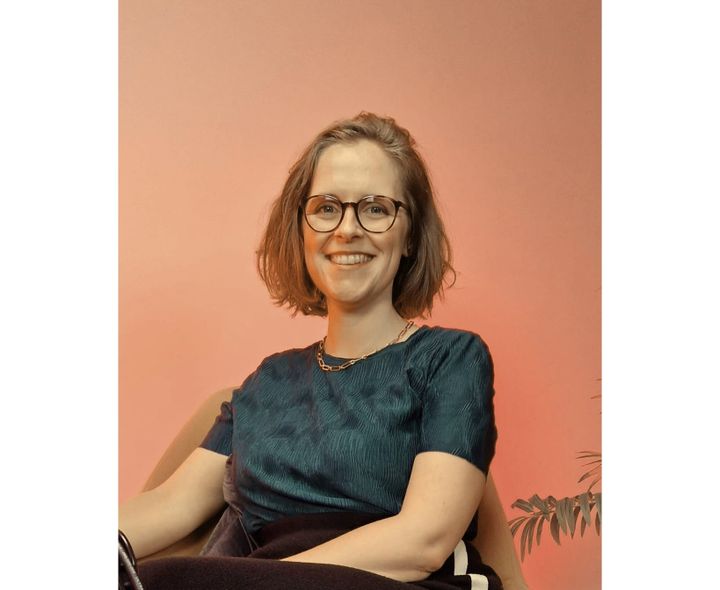
Kitty Bowles, diversity and inclusion manager at a well-known end-of-life charity, has led EDI work across financial services, the public sector and end-of-life care. She talks to Neurodivergent Works about what it means to operationalise neuroinclusion

Kitty Bowles has seen neuroinclusion attempted in some of the most contrasting environments imaginable: the data-driven world of financial services, the values-led culture of the third sector and now a hospice, where staff navigate grief and emotional intensity as part of their working day. That breadth gives her a sharp eye for what actually changes things: and what doesn't.
The differences between sectors, she says, are real but instructive. Financial services organisations often bring genuine structural strengths to inclusion: clear role expectations, robust adjustment processes and investment in tools. The problem is what those strengths can obscure.
'Neurodivergent colleagues can feel "accommodated" but not truly understood or valued,' she says. Inclusion becomes transactional, focused on compliance or productivity rather than human experience.
The third sector tends to get the human part right and the operational part wrong. There's usually a deeper instinctive commitment to values and emotional wellbeing, and neurodiversity is talked about more openly. But good intentions aren't always matched by consistent systems, manager capability or sustainable resourcing.
'Each sector has something to learn from the others,' Bowles says. 'Financial services could take more from the relational, humane approach of care-based organisations, while the third sector could benefit from being bolder about treating inclusion as essential infrastructure rather than an added extra.'
The phrase 'essential infrastructure' is central to how Bowles thinks about her work. For her, operationalising inclusion means moving neurodiversity out of the strategy document and into everyday decision-making: how roles are designed, how performance is measured, how managers are trained, how meetings are run.
'Adjustments aren't exceptions,' she says. 'They're part of good work design.' The goal is to build flexibility into systems from the outset, rather than requiring individuals to disclose, explain and self-advocate repeatedly.
When organisations get this right, the difference is visible. Neurodivergent employees don't have to be brave just to do their jobs. Adjustments are normalised, managers are confident having nuanced conversations and inclusion shows up where it matters: lower absence, stronger teams, better problem-solving.
However, when it stays at policy level, something more corrosive happens. 'You see beautifully worded commitments sitting alongside exhausted staff, inconsistent adjustments and managers who are unsure or afraid of getting it wrong. Neurodivergent employees can end up carrying the emotional labour of the organisation's learning curve.'
At her current role at a prominent end-of-life charity, that learning curve has an additional dimension. The emotional intensity of end-of-life care includes grief, pressure and sustained exposure to loss. This amplifies sensory, cognitive and emotional demands for neurodivergent staff in ways that other environments don't.
Reasonable adjustments, Bowles explains, have to be more dynamic as a result. 'It's not just about physical or cognitive adaptations, but about pacing, recovery time, psychological safety and clarity during emotionally charged situations.' For some staff that means predictability and clear boundaries; for others, access to quiet spaces, flexible scheduling, or explicit permission to step back after difficult interactions.
What strikes Bowles is that these adjustments don't only benefit neurodivergent colleagues. 'When we design work that acknowledges emotional impact and human limits, we create environments where people can sustainably care for others without burning themselves out.' Neuroinclusion, in a hospice context, becomes inseparable from staff wellbeing more broadly.
Through her work building a cross-sector EDI network for practitioners, Bowles sees the same gap recurring regardless of sector: organisations that say the right things about neurodiversity, but leave managers to implement inclusion without the time, training or support to do it well. Awareness campaigns proliferate while harder questions about workload, power, performance management, or change fatigue go unasked.
'Neurodiversity is often framed as an individual difference,' she says, 'rather than a lens through which to examine how our systems help or hinder people.' What practitioners need, she adds, is practical guidance: case studies, decision-making frameworks and permission to adapt rather than apply one-size-fits-all solutions.
Asked what she would change about UK employers' approach to neurodiversity, her answer is immediate: shift the starting point from diagnosis to design. Too much current practice still relies on individuals proving and declaring a condition before support materialises. If employers focused first on inclusive design — of jobs, systems and cultures — fewer people would need to ask for adjustments at all. 'That shift would benefit neurodivergent people immensely,' Bowles says, 'but it would also create healthier, more effective workplaces for everyone.'
It's a principle that applies as much to a hospice in Bristol as to a bank in the City. The environment changes. The logic doesn't.
Subscribe for free to receive practical guidance on neurodiversity at work, delivered to your inbox