Why neuroinclusion is not a one-off training session
Sarah Castor-Perry spent over a decade leading organisational change at boutique and Big Four consultancies before founding her own business. She explains why neurodivergence never came up once in that world, what kills neuroinclusion programmes, and why Gen Z might force businesses to get it right
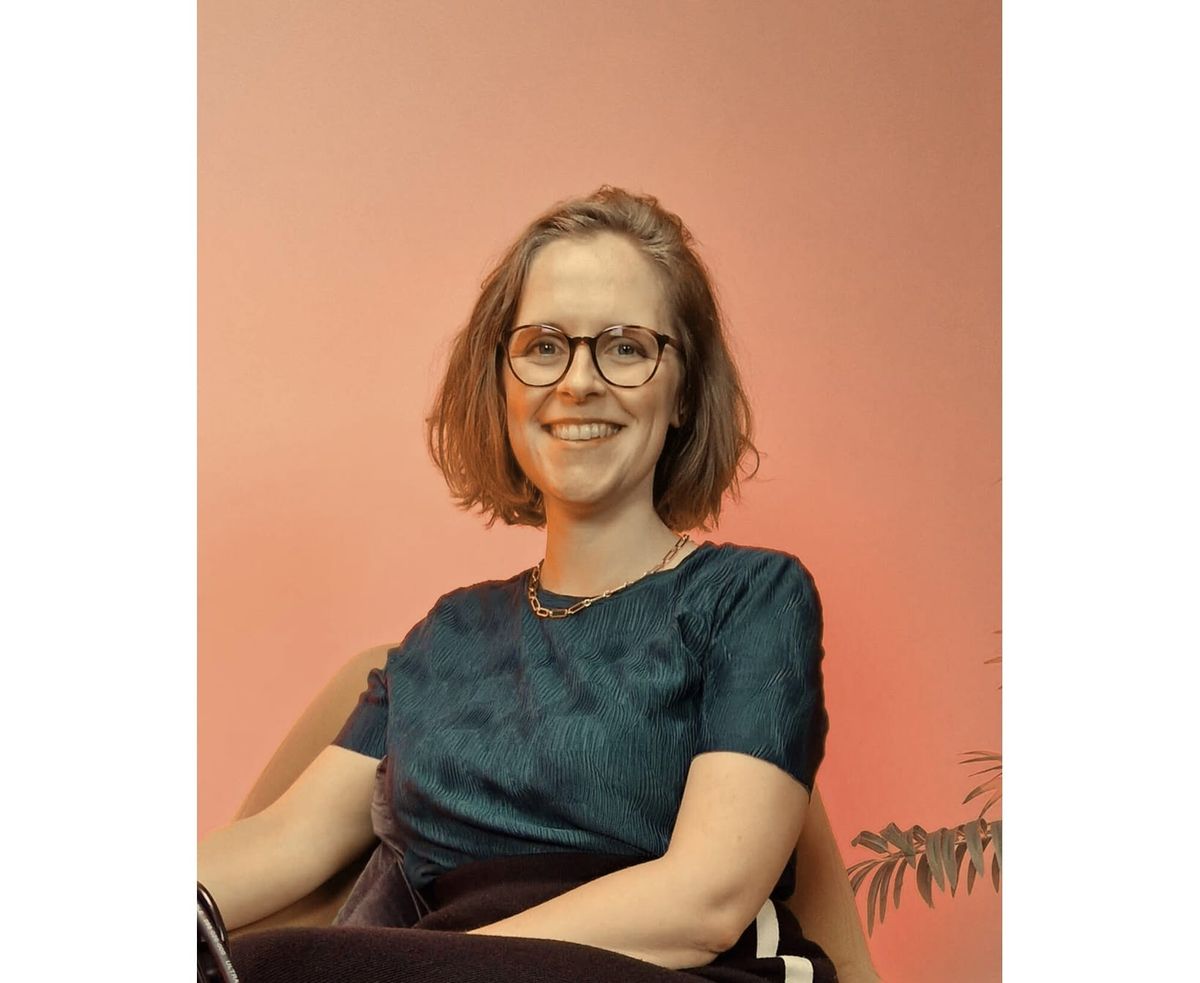
Sarah Castor-Perry was good at change. Over a decade-plus career as a consultant, she worked on large-scale operational and cultural transformation across public and private sector organisations. She understood, earlier than most, that the hard part of change was never the process or the system. It was always the people.
What she did not encounter once in all of that time was the word neurodivergence.
'I did not hear that phrase,' she says. 'I didn't encounter it at all as a consideration within change.' She is hyper-aware of that absence now. Because the same skills that make neurodivergent employees valuable during periods of change, creativity, problem-solving, pattern recognition, are the same ones that go unsupported when communication needs and the need for stability are not managed carefully. 'You end up having a lot of very burned-out people.'
Castor-Perry founded Kernel in January 2024. She is an EMCC-accredited coach, a certified ADHD and AuDHD coach and a neuroinclusion consultant who also works with individuals through the London Psychiatry Clinic. She is herself AuDHD, a realisation that came through the process of her coach training, following her initial ADHD diagnosis.
'It wasn't until I completed my AuDHD coaching training that I even realised there was a big difference between having ADHD alone and also being autistic as well as ADHD,' she says. 'And doing the training made me realise that I am definitely AuDHD, not just ADHD myself.'
The push and pull
The distinction matters to her, both personally and professionally. AuDHD, she explains, is not simply autism plus ADHD. It is its own particular tension.
'The autistic part of my brain craves and needs stability, structure, familiarity, predictability. But at the same time, the ADHD part of my brain thinks: “that's really boring, that's so dull, it's suffocating me. I want to go and do something new.”'
The two pull against each other constantly. For clients who do not understand why they are exhausted, naming that tension can be transformative. 'They might say, “I think I might have AuDHD,” and we work on it, and they go: “I just don't know why I'm exhausted all the time.” And it's because they're honouring the ADHD part of their brain, which needs the new stuff, while the autistic part is overwhelmed and really struggling.'
She is also candid that the terminology itself is not ideal. ADHD, she points out, describes neither a deficit of attention nor simply hyperactivity, and says nothing about the emotional dysregulation that is central to many people's experience. Joining it together with autism to create AuDHD is similarly imperfect. 'Considering it as just "this" plus "this" is a little too simplistic.' But in the absence of a wholesale rewrite of the DSM-5, she says, it gives people something to anchor the conversation to.
The environment, not the person
When Neurodivergent Works asked how much of the overwhelm neurodivergent employees carry is personal, and how much is the accumulated weight of working in environments not designed for them, Castor-Perry did not hesitate.
'A lot of the overwhelm comes from environments that are not designed to help you thrive.'
It is this observation that pushed her to develop the neuroinclusion consulting side of Kernel. 'I was coaching and seeing all these absolutely brilliant people who were really struggling at work, and so much of it was not within the control of our coaching sessions. We can work together until we're both blue in the face, and then you will go back into this environment that's not set up for you. And that's not helpful.'
As a coach, it is not her place to tell a client to leave a job, even when the environment is clearly holding them back. What she can do is work on self-confidence and self-trust, helping clients to trust their own judgment after years of negative feedback have eroded it.
'If I can work with them on that, they will have more agency to make that decision themselves. They might then go: “hang on a minute, this isn't good enough for me. I deserve better.”'
Where training ends and inclusion begins
Kernel offers both awareness training and what Castor-Perry calls inclusion-embedding support. The distinction is significant.
Training, she says, is an important part of the journey. It builds knowledge, gives people vocabulary they may not have had and creates space for questions. But it is not neuroinclusion on its own. 'The real neuro inclusion work is much bigger and much harder. It's about considering every aspect of your business and whether it's set up to be inclusive, across the entire employee life cycle.'
The examples she reaches for are practical and concrete. A recruitment process that requires a written application may deter a dyslexic candidate. An open-plan office that fosters collaboration may also distract ADHD employees and overwhelm autistic ones. Slack notifications popping up constantly across a working day are not a neutral design choice. 'Those kinds of things just happen in organisations because people haven't thought about it.'
What kills a neuroinclusion programme, in her experience, is the assumption that it is once-and-done. 'Businesses think, "oh, we'll do this little awareness webinar and we are now neuroinclusive." Well, that's not really how it works.'
The deeper problem is that many companies still treat this as a nice-to-have rather than a business imperative. Castor-Perry thinks that framing is increasingly difficult to sustain. Neuroinclusive teams have been shown to be significantly more productive. And on the other side of the ledger, employment tribunal claims related to neurodivergence rose by close to 80% in the last year, with payouts now uncapped as of April 2025. 'I wouldn't just want to say: “don't get it wrong or you'll be hit with a big stick.” But there are real stakes here.'
The generational shift
Castor-Perry is optimistic, and her optimism has a specific shape. She thinks the driver for change will be Gen Z.
'Gen Z in particular are much more literate about inclusion and open about their own neurodivergence. You're going to get people voting with their feet for where they choose to work.'
Companies that are genuinely inclusive will attract the best people. Those that are not will find that younger employees notice. 'That fills me with hope.'
She is also honest about the friction that comes from the other direction. Across the organisations she works with, she has seen a consistent pattern: senior people who are uncertain, even sceptical; junior people who regard neurodiversity as straightforwardly positive.
She says it gently, and with recognition. Her own father, in his late 60s, is now wondering whether he too might have ADHD, prompted by her adult diagnosis. 'You've got people maybe questioning that. And then there's also: “I had to struggle through it, so I'm going to make everyone else struggle through it too.”' She pauses. 'So you've got to flip that script.'
Sarah Castor-Perry is the founding director of Kernel Coaching and Consulting and an in-house coach at London Psychiatry Clinic. She can be found at kernelcoachingconsulting.com
Subscribe for free to receive practical guidance on neurodiversity at work, delivered to your inbox.
Subscribe for free